Seraphs
November 2014
Created for National Novel Generation Month, Seraphs is a computer-generated book evoking the mysterious Voynich Manuscript. The project is an exercise in generative asemic writing—producing text that resembles language but carries no semantic meaning.
About the project
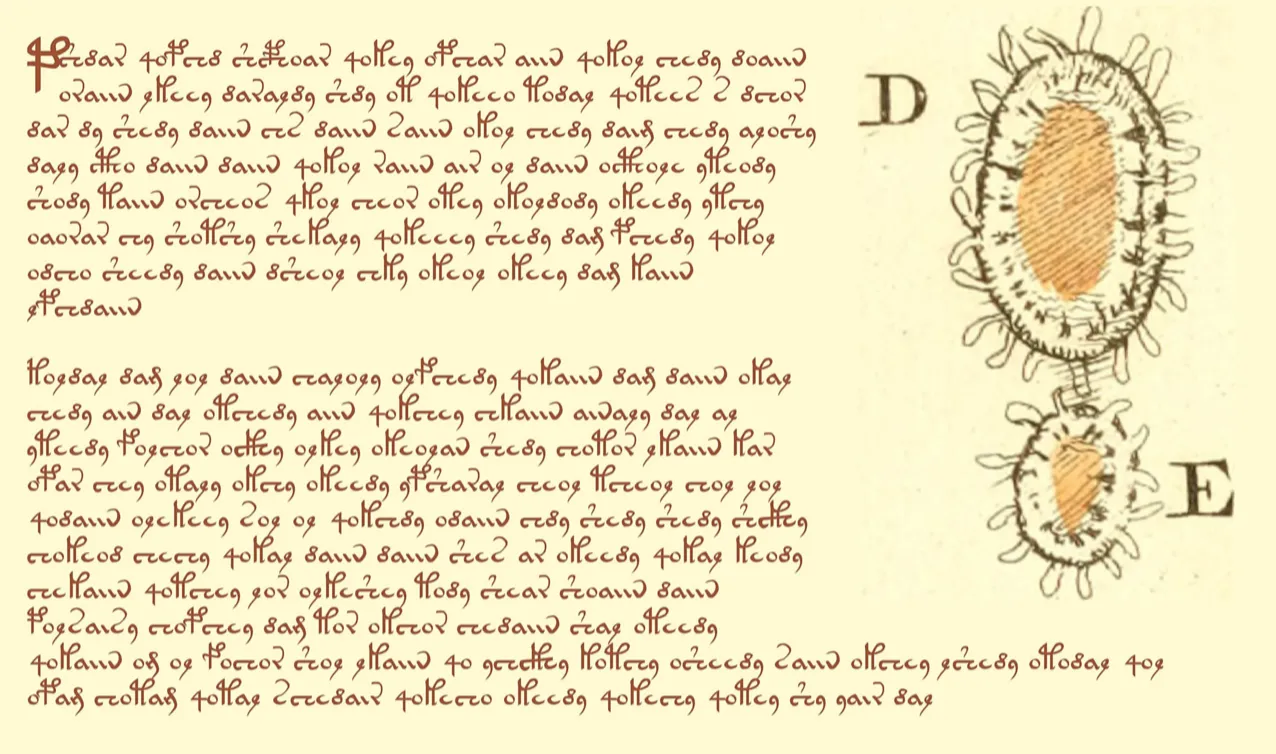
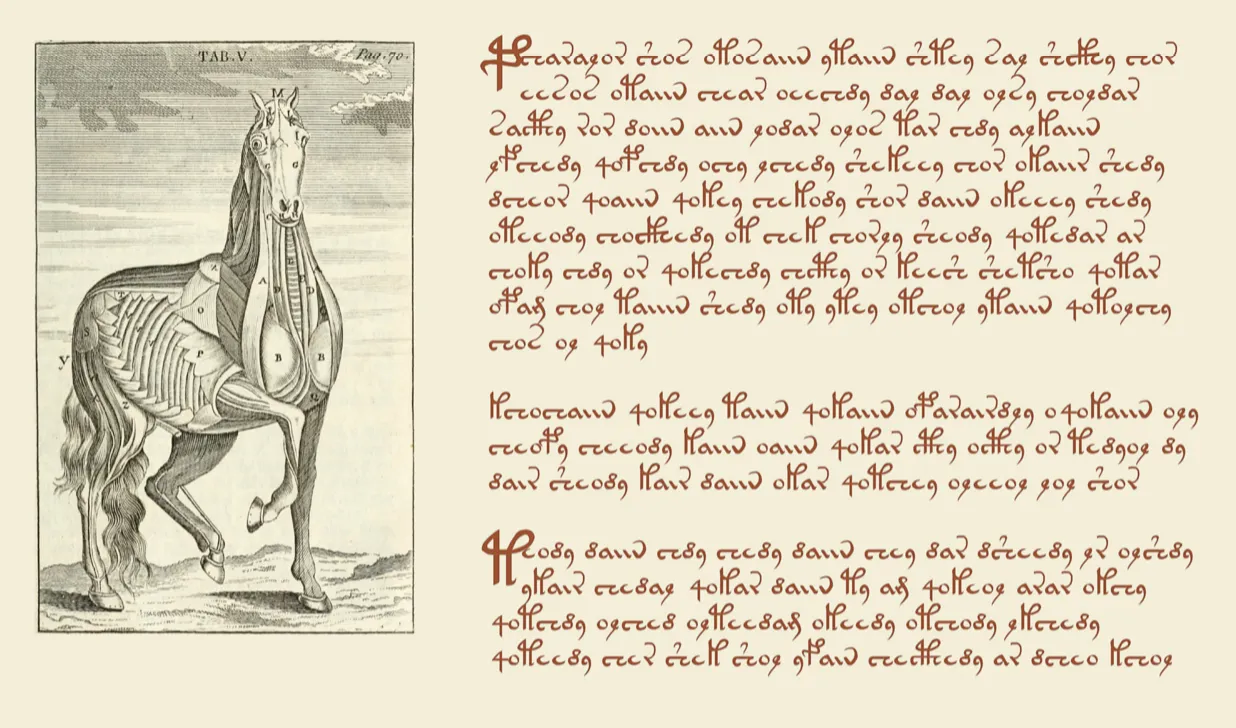
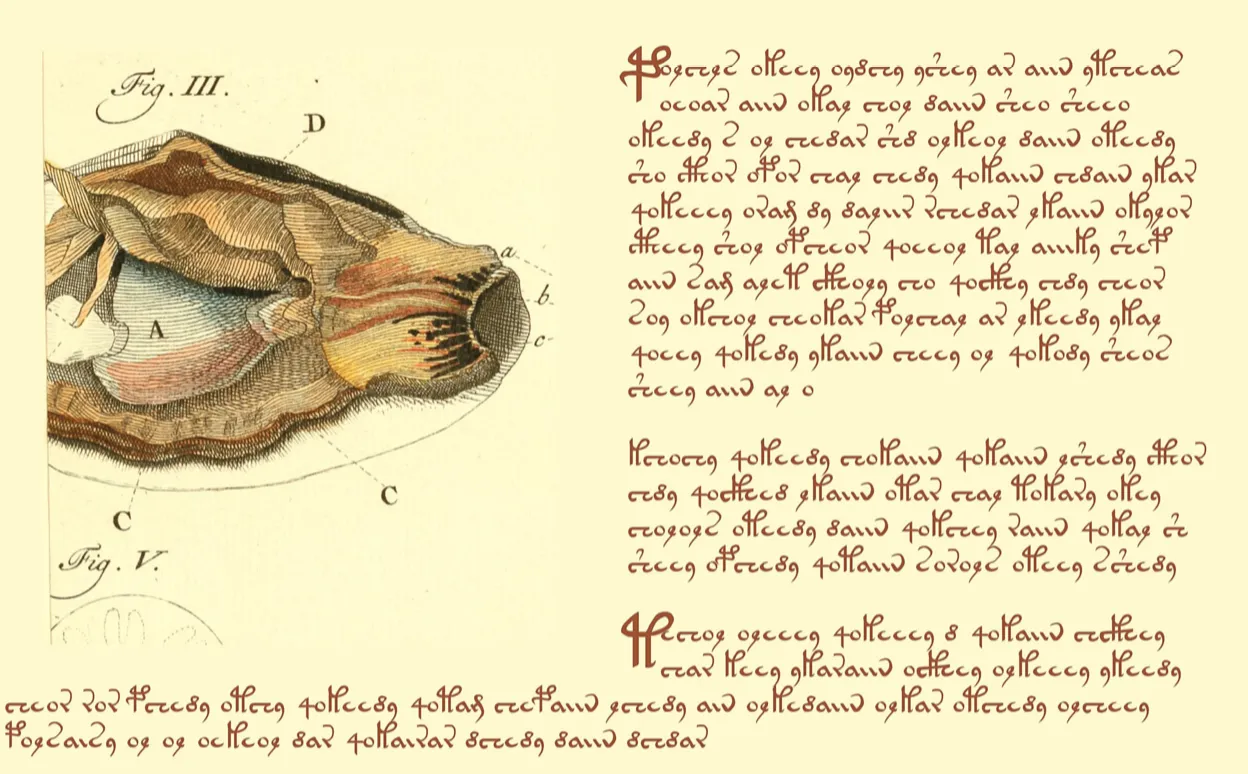
When executed, Seraphs will output a hoax document of potentially infinite length—a book set in unreadable text, accompanied by unlabeled diagrams and illustrations pulled at random from real historical artifacts.
A free 70-page PDF version is available as seraphs.pdf, or a fully laid out book is available for purchase at cost from Blurb.
About the text
Voynich scholars have created several transliterations for the manuscript. I used the EVA transcription, which I converted to a simple list of source words. After feedback from a real-life scholar, the program was updated to limit starting words to the small set found in the manuscript.
The main program slurps up the words, randomizes them, and lays them out in a series of canned templates using Jinja2. I set them in a public domain "Voynich" font.
Images
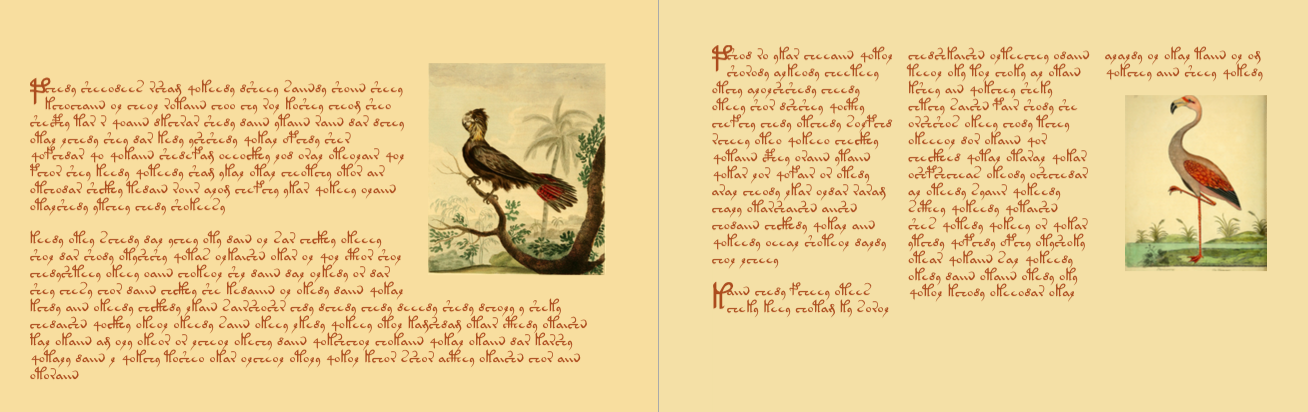
The original manuscript is heavily illustrated with fantastic sketches of fictional plants, nonexistent cosmological bodies, and a healthy number of naked ladies. The illustrations are grouped thematically. I selected keywords like "botany" and "alchemy" that, insofar as the original makes any sense, correspond to those themes.
I used the Flickr API to access the Internet Archive's 14 million image collection. Each image is tagged with its original century, which meant that I could select "period" illustrations with any given keyword search. Trial and error landed on the 18th century being the "best" from a purely aesthetic point of view.
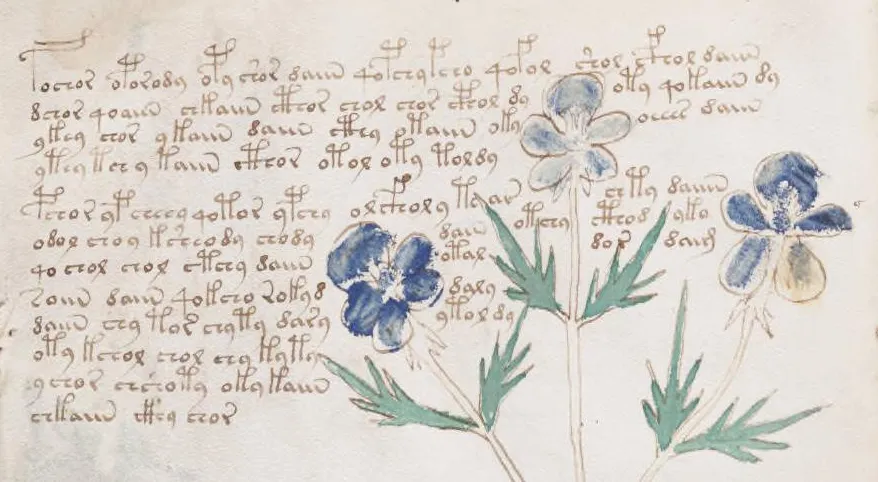
As with Voynich, each page has only one image on it; the dimensions and size influence which template is chosen. In the hand-written original, the text flows tightly around the illustrations. It's possible to do this kind of layout in CSS, using the CSS Shapes specification, but that wasn't available in my chosen output pipeline, so I went with standard floats.
Page output
There are really no viable open-source implementations of CSS's support for advanced paged-media, and even as of 2026 browser support is spotty. I used Prince XML and Nellie McKessan's article on A List Apart was an invaluable reference for producing print-ready HTML files.
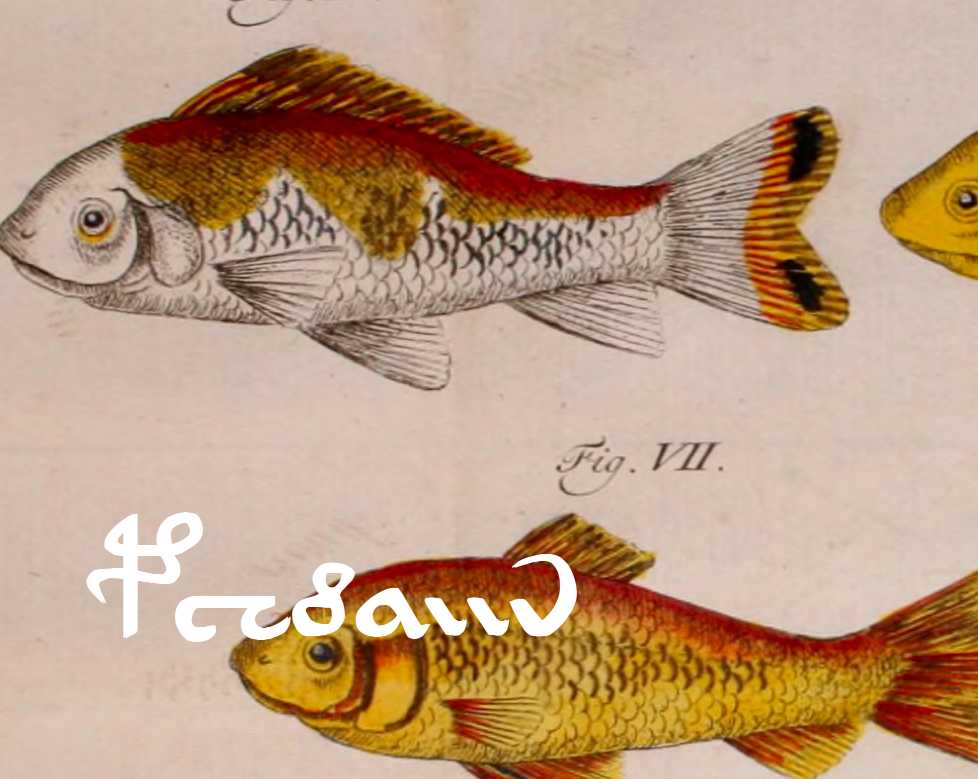
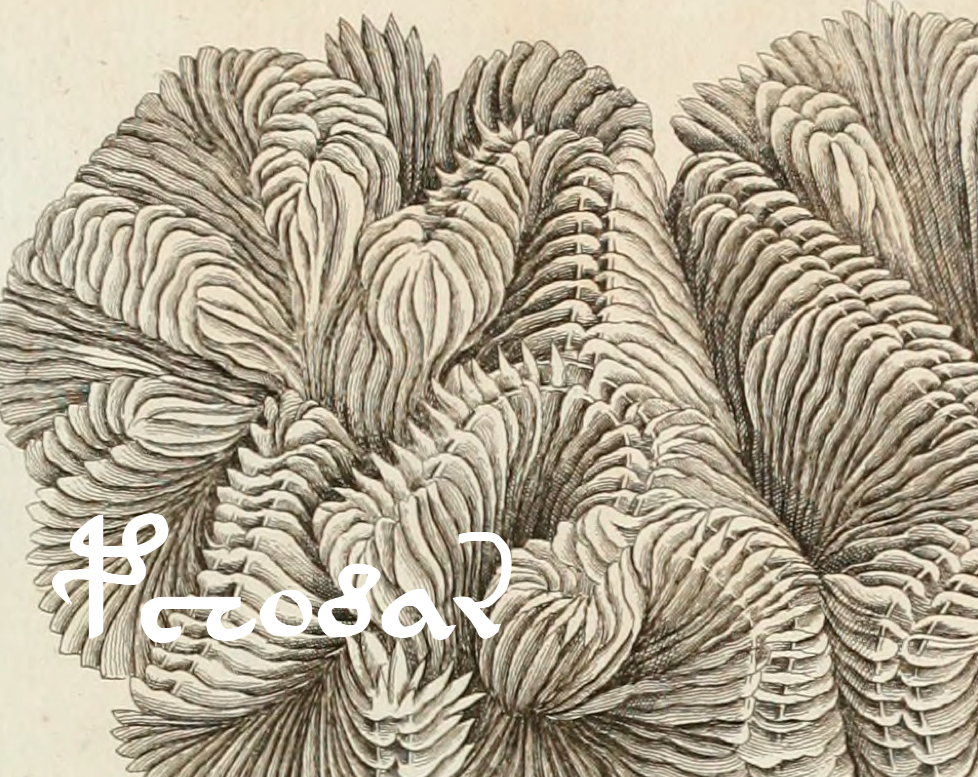
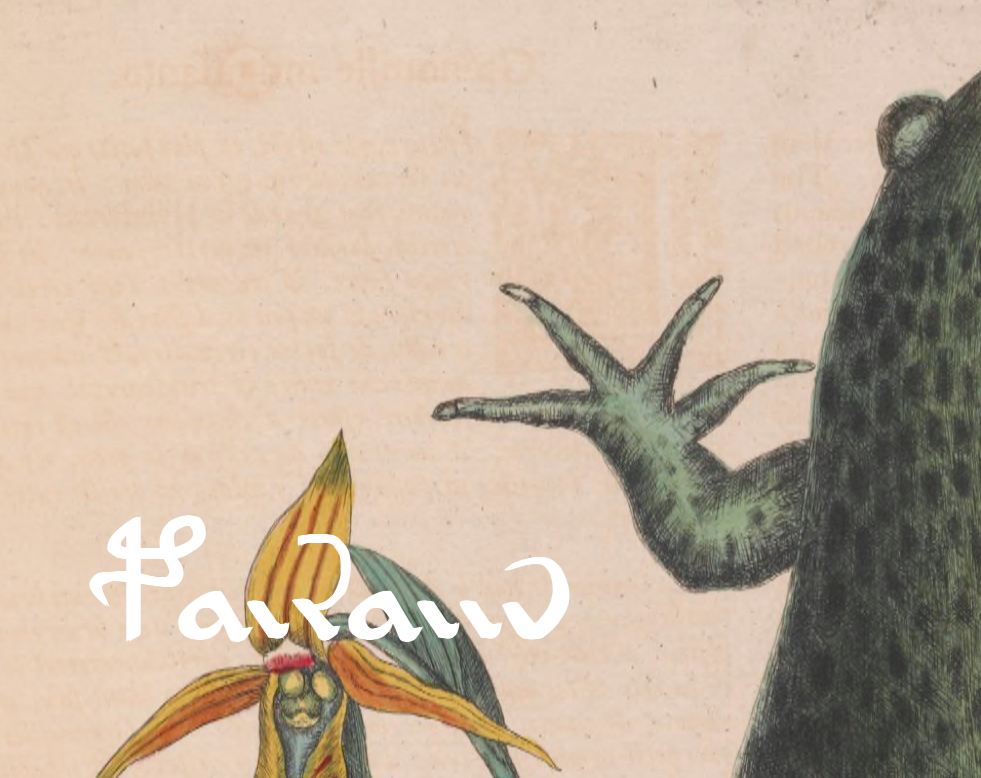
Each thematic generates a full-bleed cover with a random Voynich word overlaid as the title. These end up being some of my favorite pages.
References
- Voynich Manuscript, Beinecke Rare Book & Manuscript Library
- Output: An Anthology of Computer-Generated Text, 1953–2023, MIT Press, 2024
- EVA transcription of the Voynich text
- Asemia and the gesture of writing, Network Cultures, 2015
- Author Function exhibit, MIT Libraries, 2018
- Seraphs source code on Github
- Novels written by computers for NaNoGenMo, BookRiot, 2017
- Seraphs review, Procedural Generation, 2015
- Who's afraid of robot culture?, The Pacific Standard, 2015
- Text by Procedure, Tedium, 2019
- Building books with CSS3, A List Apart, 2012
- Internet Archive image collection on Flickr, 2014